
Dreamflow vs qtrl.ai
Side-by-side comparison to help you choose the right AI tool.

Dreamflow
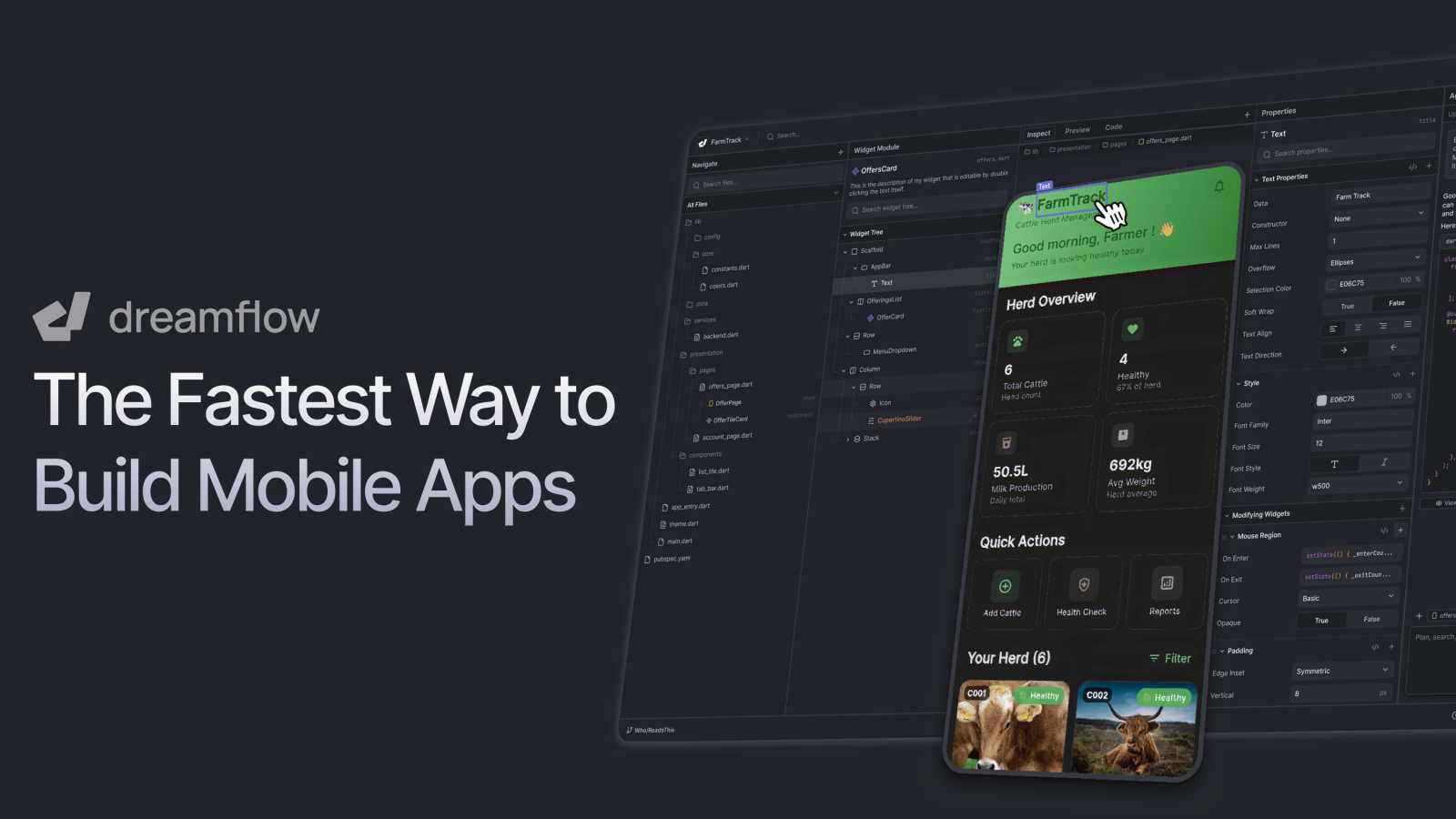
Dreamflow is a visual AI builder that lets you create production-ready mobile apps with seamless canvas and code inte...

qtrl.ai
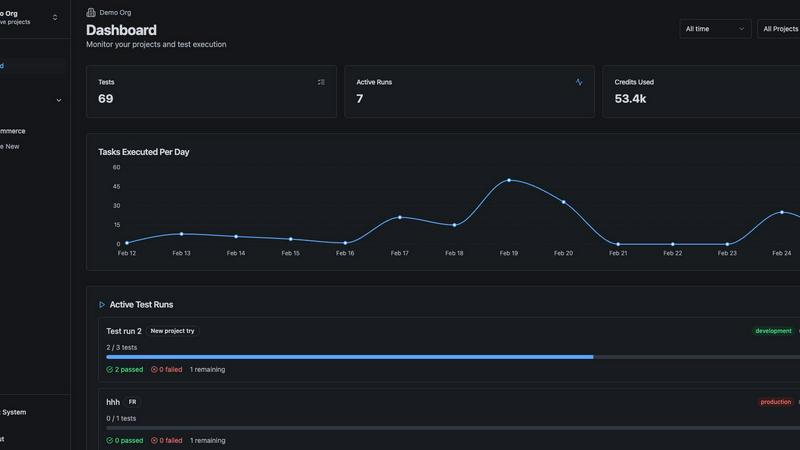
qtrl.ai helps QA teams scale testing with AI agents while keeping full control and governance.
Last updated: February 27, 2026
Visual Comparison
Dreamflow
qtrl.ai
Feature Comparison
Dreamflow
Tri-Surface Editing
Dreamflow features a tri-surface editing environment that allows users to switch seamlessly between AI prompts, a visual canvas, and full code. This integration ensures that changes made in one surface are automatically reflected across all others, providing a fluid development experience.
AI-Powered Generation
The platform utilizes advanced AI technology that is context-aware, enabling it to understand user inputs and project requirements. This smart AI scaffolds features based on best practices, allowing users to speed up the app development process with intelligent suggestions and automated code generation.
Responsive Design for All Screens
Dreamflow makes it easy to build responsive applications that look great on any device. With Flutter as its backbone, users can create apps that adapt to different screen sizes and orientations, ensuring a consistent user experience across mobile and web platforms.
Backend Integration
One of the standout features of Dreamflow is its out-of-the-box integration with popular backend services like Firebase and Supabase. This capability allows users to build full-stack applications that can scale effectively right from the start, enabling more complex functionalities without additional setup.
qtrl.ai
Enterprise-Grade Test Management
qtrl provides a robust, centralized system for all your testing artifacts. You can create and organize test cases, build detailed test plans, and execute structured test runs. Everything is linked for full traceability, allowing you to see exactly which requirements are covered by which tests. This creates clear audit trails and is built to support compliance needs, giving managers and stakeholders complete confidence in the testing process.
Autonomous QA Agents
This is the intelligent engine of qtrl. These AI-powered agents can execute high-level instructions on demand. You can describe a test scenario in natural language, like "test the checkout flow as a guest user," and the agent will run it in a real browser. They operate within your defined rules and can run continuously across different environments, providing scalable automation that adapts to your application's changes without constant manual script updates.
Progressive Automation Model
qtrl doesn't force you to jump into full AI automation. You start where you are comfortable, writing clear test instructions for the agents to follow. As trust builds, you can let qtrl suggest and generate new tests automatically based on coverage gaps or requirement changes. Every step is reviewable and approvable, ensuring your team always stays in the driver's seat while gradually increasing efficiency.
Governance by Design
Trust and control are foundational to qtrl. The platform offers permissioned autonomy levels, so you decide how much freedom the AI agents have. There are no black-box decisions; you get full visibility into what the agents are doing. Combined with enterprise-ready security, encrypted secrets management, and the fact that secrets are never exposed to the AI, qtrl provides the governance framework necessary for serious engineering teams to adopt AI confidently.
Use Cases
Dreamflow
Rapid Prototyping
Dreamflow is ideal for entrepreneurs and product managers who need to quickly prototype their app ideas. With AI-generated features and a visual editor, users can create a working model of their app in a matter of minutes, facilitating faster market testing and feedback collection.
Individual App Development
Solo developers can leverage Dreamflow to build and publish their applications without needing extensive coding knowledge. The platform’s intuitive design tools and AI support make it accessible for anyone looking to turn their app concept into reality.
Team Collaboration
For development teams, Dreamflow offers a collaborative environment where multiple members can work on different aspects of the app simultaneously. The synchronized editing features allow teams to make real-time changes and updates, enhancing productivity and communication.
Education and Learning
Dreamflow is a fantastic resource for students and educators in tech programs. It provides a hands-on way to learn app development, as users can experiment with AI prompts and coding while visually seeing the results of their changes, making complex concepts more approachable.
qtrl.ai
Scaling Beyond Manual Testing
For QA teams overwhelmed by repetitive manual test cycles, qtrl offers a clear path forward. They can begin by documenting their existing manual tests as structured instructions in qtrl's management module. From there, they can progressively automate the most tedious flows using the AI agents, freeing up human testers for more complex exploratory work and dramatically increasing test coverage and execution speed.
Modernizing Legacy QA Workflows
Companies stuck with outdated, script-heavy automation frameworks can use qtrl to transition smoothly. Instead of maintaining brittle scripts, teams can leverage qtrl's adaptive memory and AI agents to generate more resilient tests. The platform integrates with existing CI/CD pipelines and tools, allowing for a gradual modernization without a disruptive, all-at-once overhaul of the current process.
Ensuring Governance in Enterprise QA
Large organizations with strict compliance and audit requirements need control alongside automation. qtrl's full traceability from requirement to test execution, combined with its permissioned autonomy and detailed audit logs, makes it ideal. Engineering leads can scale QA efforts with AI while providing auditors with clear evidence of what was tested, when, and what the outcome was.
Empowering Product-Led Engineering Teams
Development teams that practice continuous deployment need fast, reliable feedback on quality. qtrl integrates into their workflow, allowing developers to write high-level test instructions for features they build. The autonomous agents can then execute these tests across environments as part of the CI/CD process, providing continuous quality feedback without requiring developers to become experts in test automation frameworks.
Overview
About Dreamflow
Dreamflow is a cutting-edge platform designed to empower developers and non-developers alike to create mobile apps with ease and efficiency. It combines the speed of artificial intelligence with a powerful visual editor and full Flutter code access, allowing users to bring their app ideas to life without unnecessary hurdles. Whether you're a solo entrepreneur, a startup founder, or part of a larger team, Dreamflow provides the tools you need to develop robust, production-ready applications. The platform's unique tri-surface editing feature keeps AI prompts, visual designs, and coding in sync, offering unparalleled flexibility and control over your app-building experience. With Dreamflow, you can effortlessly transform concepts into fully functional apps, ready for deployment on various platforms including the App Store and Play Store.
About qtrl.ai
qtrl.ai is a modern QA platform designed to help software teams scale their quality assurance efforts without sacrificing control or governance. It uniquely combines enterprise-grade test management with powerful, trustworthy AI automation. At its core, qtrl provides a centralized hub where teams can organize test cases, plan test runs, trace requirements to coverage, and track quality metrics through real-time dashboards. This structured foundation ensures clear visibility into what's been tested, what's passing, and where potential risks lie for engineering leads and QA managers.
Where qtrl truly stands apart is its progressive AI layer. Instead of forcing a risky, "black-box" AI-first approach, qtrl introduces intelligent automation gradually. Teams can start with simple manual test management and, when ready, leverage built-in autonomous agents. These agents can generate UI tests from plain English descriptions, maintain them as the application evolves, and execute them at scale across multiple browsers and environments. This makes qtrl perfect for product-led engineering teams, QA groups moving beyond manual testing, companies modernizing legacy workflows, and enterprises that require strict compliance and audit trails. Ultimately, qtrl's mission is to bridge the gap between the slow pace of manual testing and the brittle complexity of traditional automation, offering a trusted path to faster, more intelligent quality assurance.
Frequently Asked Questions
Dreamflow FAQ
What platforms can I deploy my apps on using Dreamflow?
Using Dreamflow, you can deploy your apps to multiple platforms including the App Store, Google Play Store, and web applications, all with just a few clicks.
Do I need to know how to code to use Dreamflow?
No, you do not need to be an expert coder to use Dreamflow. The platform is designed to be user-friendly, allowing individuals without coding knowledge to create apps using AI prompts and a visual editor.
Can I integrate backend services into my app?
Absolutely! Dreamflow supports integration with popular backend services like Firebase and Supabase, enabling you to build robust, full-stack applications easily.
What support is available for Dreamflow users?
Dreamflow offers various support options including a dedicated support team for enterprise users, onboarding engagement, and access to community resources, ensuring you have help whenever you need it.
qtrl.ai FAQ
How does qtrl's AI handle changes in my application's UI?
qtrl's autonomous agents are designed with adaptive memory. They build a living knowledge base of your application by learning from every exploration and test execution. When the UI changes, this context helps the AI understand the new structure. It can often adjust test steps automatically, and when it can't, it will flag the test for human review, making maintenance far less brittle than traditional coded automation.
Is my test data and application access secure with an AI agent?
Absolutely. Security and governance are core to qtrl's design. The platform uses enterprise-grade security practices. Crucially, any sensitive data like passwords or API keys are stored as encrypted environment secrets. These secrets are never exposed to the AI agent during execution; the system injects them securely, ensuring your credentials and data remain protected at all times.
Can I use qtrl if I only want test management without AI?
Yes, definitely. qtrl is built on a progressive automation model. You can use it solely as a powerful, structured test management platform from day one. The AI features are there to augment your workflow when you're ready. You can introduce AI-assisted test generation and execution at your own pace, starting with simple instruction-based execution and increasing autonomy over time.
How does qtrl integrate with our existing development tools?
qtrl is built to fit into real-world engineering workflows. It offers integrations for requirements management tools and full support for CI/CD pipelines. This means you can trigger test runs automatically from a pull request or a build, and feed results back into your monitoring dashboards. It's designed to work alongside your current toolchain, not replace it entirely.