
fnel vs Fusedash
Side-by-side comparison to help you choose the right AI tool.

Fnel offers solo founders real-time funnel analytics to quickly identify and fix conversion drop-offs with one simple.
Last updated: March 1, 2026

Fusedash turns your raw data into clear dashboards and charts so your team can act on insights instantly.
Last updated: March 3, 2026
Visual Comparison
fnel
Fusedash
Feature Comparison
fnel
Founder-friendly Analytics
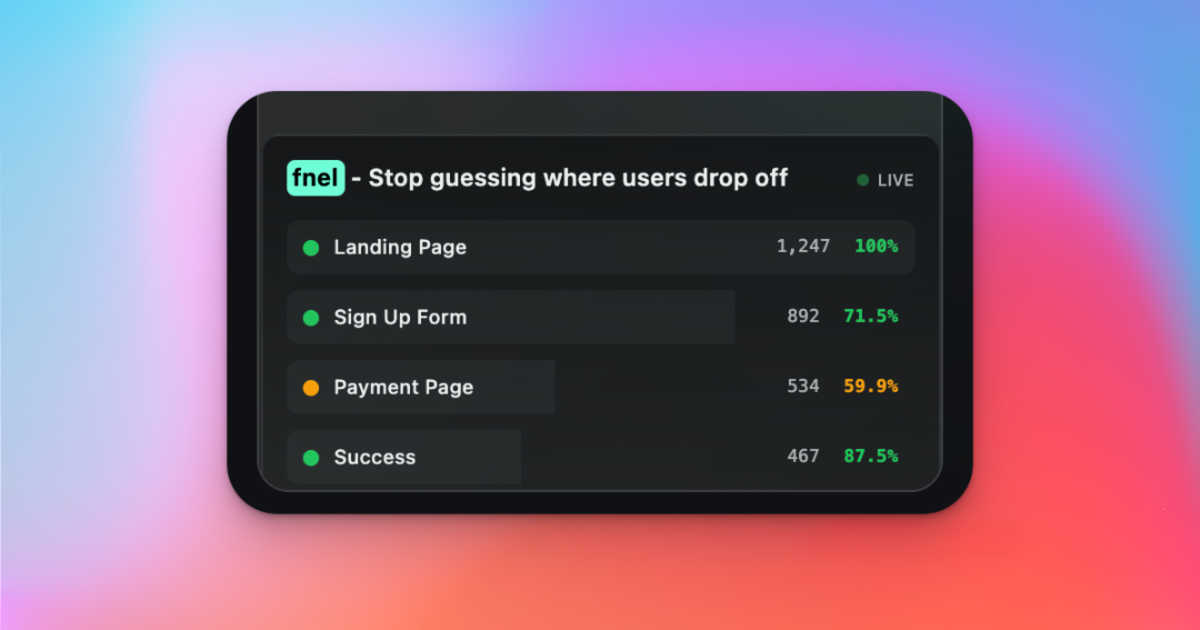
With fnel, you can track your funnel in real-time with just one line of code. This feature allows you to immediately identify where users drop off, taking the guesswork out of conversion rates. It's designed specifically for fast-paced solo founders who need quick insights without the clutter.
Live Funnel Visualizations
Fnel provides real-time visualizations of your funnels, enabling you to see user flow through various stages, whether it’s SaaS signups, e-commerce checkouts, or lead generation forms. This feature is invaluable for quickly identifying leaks and opportunities for improvement.
Smart Drop-off Alerts
Automatically detect when a step in your funnel unexpectedly underperforms. Fnel's smart alerts notify you of significant drop-offs, allowing you to react promptly to potential issues and optimize the user journey effectively.
A/B Test Validation
Fnel makes it easy to run A/B tests and validate your hypotheses. You can compare variants by step-level conversion rates, providing you with actionable insights rather than vanity metrics. This feature empowers you to make data-driven decisions for better user engagement.
Fusedash
Flexible Multi-Format Views
Fusedash understands that different stakeholders need information presented in different ways. That's why you can take a single, connected dataset and instantly present it as an executive KPI dashboard, a detailed chart for analysis, an interactive map for geo-analysis, or a narrative report with storytelling context. This flexibility eliminates the back-and-forth of creating custom reports for each audience, saving time and ensuring message consistency. You can customize layouts, apply universal filters, and set time ranges that work for each team's needs.
AI-Powered Chart Generator
Jumpstart your data storytelling with the AI chart generator. Simply upload a CSV or connect to an API, and Fusedash helps you create clear, effective visuals in minutes. The AI assists in selecting the most appropriate chart type for your data, applying meaningful comparisons, and refining labels to ensure the visual accurately tells your story. These charts can be used as powerful standalone assets for presentations or seamlessly dropped into larger dashboard views for comprehensive reporting.
Integrated AI Chat & Assistance
When you're exploring data and aren't sure where to begin, Fusedash's Smart Chat is your guide. Ask questions about your data in plain, natural language—like "What were sales in the northwest region last quarter?"—and get instant answers, suggested breakdowns, and recommendations for relevant metrics or charts. You can then instantly turn these insights into a new, shareable dashboard view, dramatically speeding up the journey from question to actionable visual report.
Unified Data Integration & Reusability
Stop rebuilding the wheel every time you need a report. Fusedash lets you bring data together from various sources—upload CSVs, connect directly to live APIs, or enrich your analysis with public datasets—all within one platform. Once connected, you can combine these datasets for a unified view and, most importantly, reuse the same prepared data and KPI definitions across countless charts, dashboards, and reports. This creates a single source of truth and ensures your metrics are always calculated consistently.
Use Cases
fnel
SaaS Signup Optimization
For SaaS founders, fnel can track the entire signup process, from landing page visits to email verification and onboarding. By identifying where users drop off, you can make targeted improvements that enhance the overall signup experience.
E-commerce Checkout Analysis
E-commerce businesses can leverage fnel to visualize the checkout process. By tracking cart abandonment, shipping steps, and payment completions, you can pinpoint friction points that cause users to abandon their carts, allowing for timely fixes.
Agency Lead Funnel Tracking
Marketing agencies can utilize fnel to track their lead generation funnels. By monitoring the journey from form submissions to booked calls, you can identify which campaigns convert best, thereby optimizing your marketing strategies effectively.
Product Launch Validation
If you are launching a new product, fnel can help you validate your funnel quickly. By tracking user interactions and drop-offs, you can gather essential insights that inform your marketing approach, ensuring your launch is as successful as possible.
Fusedash
Executive KPI Review Dashboards
Leadership teams need a high-level, real-time view of business health without getting lost in the weeds. Fusedash enables the creation of clean, focused dashboards that aggregate key performance indicators from across the organization. Executives can monitor trends, filter by department or region, and quickly drill down when a metric changes to understand the underlying drivers, all from a single, always-updated view.
Marketing & Revenue Performance Tracking
Marketing and sales teams can use Fusedash to track campaign performance, pipeline health, and revenue metrics in one place. By connecting data from CRM, ad platforms, and web analytics, teams can build dashboards that show ROI, lead generation trends, and conversion rates. The storytelling feature is perfect for adding context to weekly reports, explaining what changed and what the next actions should be.
Operations & Real-Time Monitoring
For teams where minutes matter, such as IT, logistics, or customer support, Fusedash's real-time interfaces are essential. Connect to live APIs and databases to monitor fast-moving metrics like system uptime, transaction volumes, or support ticket backlogs. Set up alerts and visualizations that update instantly, allowing teams to identify and react to issues as they happen, ensuring smooth operational continuity.
Geographic Analysis with Map Visualizations
Businesses with a physical or regional component can leverage Fusedash's built-in map visualizations. Plot store performance, customer density, shipment logistics, or service coverage areas on interactive maps. This geo-analysis makes spatial patterns immediately obvious, helping with territory planning, resource allocation, and market expansion strategies by visually answering the "where" behind the data.
Overview
About fnel
fnel is an innovative funnel analytics tool designed with the unique needs of solo founders, indie hackers, and early-stage startups in mind. Unlike traditional analytics platforms that often present complex dashboards and require intricate integrations, fnel simplifies the process of understanding customer journeys. It allows users to quickly pinpoint where potential customers drop off in their conversion funnels with just a single line of code. This ease of setup eliminates the usual headaches associated with analytics tools, enabling founders to focus on refining their signups, onboarding processes, and overall conversion rates. Whether you are validating a new idea, managing a side project, or scaling your first SaaS product, fnel equips you with the essential insights to make informed decisions swiftly. Its user-friendly interface and developer-centric design mean you can spend less time configuring analytics and more time building your product, ensuring you are always one step ahead in optimizing user experiences and driving growth.
About Fusedash
Fusedash is an AI-powered data visualization platform designed to help teams transform their connected data into clear, actionable insights. It acts as a unified workspace where you can create decision-ready dashboards, interactive charts, detailed maps, and narrative reports without the need to rebuild the same logic across multiple, disconnected tools. The core value proposition is consistency and efficiency: you define your key metrics and KPIs once, and then reuse those consistent definitions across every view and report. This ensures everyone in the organization—from leadership to marketing to operations—is looking at the same trusted numbers. Fusedash is built for teams that are tired of manual reporting cycles and conflicting data stories. It empowers users to not only monitor what's happening through real-time interfaces but also to understand why it's happening by drilling down into segments, regions, or time periods. With integrated AI features like natural language data chat and smart visualization assistance, Fusedash makes data exploration and reporting faster and more accessible, turning raw data into a shared source of truth that drives alignment and action.
Frequently Asked Questions
fnel FAQ
How is fnel different from GA or Mixpanel?
Fnel is designed specifically for funnel tracking and speed. Unlike GA or Mixpanel, it offers a straightforward setup with one snippet, step-level insights, and automatic drop-off detection, eliminating the complexity that often hampers traditional analytics tools.
Is there a Free plan?
Yes, fnel offers a Free Starter plan that includes up to 5,000 events per month and allows for tracking of up to three funnels. This plan requires no credit card, making it easy for users to get started and validate their funnels.
What are the Pro and Lifetime details?
The Pro plan costs $12 per month (or $9.99 when billed annually) and includes up to 100,000 events per month, unlimited funnels, real-time dashboards, and advanced analysis features. The Lifetime access plan offers everything in Pro for a one-time payment, ensuring no ongoing fees.
How quickly can I set up fnel?
Setting up fnel is incredibly quick. You simply need to install the fnel package, add your API key, and start tracking events. Most users report being able to view real-time analytics within minutes of completing the setup.
Fusedash FAQ
What kind of data sources can I connect to Fusedash?
Fusedash offers flexible data integration options to suit various needs. You can start quickly by uploading CSV or Excel files directly. For live, updating data, you can connect to countless applications and databases via their APIs. The platform also supports enriching your views with public datasets, which is especially useful for adding geographic or market context to your internal data.
How does the AI Chat feature actually work?
The AI Chat, or Smart Chat, acts as an intelligent assistant within your data. You type questions in natural language, just as you would ask a colleague, such as "Show me monthly revenue for product X." The AI interprets your question, queries the connected dataset, and provides an answer in text form. It can also suggest the best way to visualize that answer—recommending a chart type or a new dashboard view—which you can then create with a single click.
Can I share the dashboards and reports I create with people outside my team?
Absolutely. A key function of Fusedash is to facilitate easy sharing and alignment. You can generate shareable links to your dashboards, charts, or narrative reports. Recipients can view the interactive visualizations, apply filters, and explore the data without needing a Fusedash account, making it simple to keep stakeholders, clients, or leadership informed with the latest insights.
Is Fusedash suitable for real-time data monitoring?
Yes, Fusedash is built to handle real-time monitoring scenarios. By connecting to live API data sources, you can create interfaces and dashboards that refresh at intervals you define—even as frequently as every minute. This is ideal for operational teams that need to monitor system health, live sales data, or social media mentions, allowing them to see changes and react promptly.
Alternatives
fnel Alternatives
fnel is a cutting-edge funnel analytics tool tailored for solo founders, indie hackers, and early-stage startups. It simplifies the process of tracking and analyzing user behavior throughout conversion funnels, allowing users to quickly pinpoint where potential customers drop off. Many users seek alternatives to fnel due to factors such as pricing, specific feature requirements, or the need for integration with other platforms. When searching for an alternative, it's essential to consider the ease of setup, the clarity of data visualization, and how well the tool aligns with your unique business needs. Choosing the right analytics tool can significantly impact your ability to make data-driven decisions. Look for alternatives that offer real-time tracking, user-friendly interfaces, and customizable features that can grow alongside your business. Also, consider any additional functionalities like A/B testing and alert systems that can enhance your understanding of user behavior and optimize your conversion rates effectively.
Fusedash Alternatives
Fusedash is an AI-powered analytics and data visualization platform. It helps teams build dashboards, track KPIs, and generate narrative reports from their connected data sources. The platform is designed to provide consistent, decision-ready insights across an organization. Users often explore alternatives for various reasons. This could be due to specific budget constraints, the need for different integration capabilities, or a desire for features tailored to a particular industry or team size. The search for the right tool is a normal part of finding the perfect fit for a company's unique data stack and workflow requirements. When evaluating other options, consider your core needs. Key factors often include the ease of connecting to your data sources, the flexibility of visualization and reporting, the role of AI and automation features, and the overall user experience for both analysts and business stakeholders. It's also wise to assess the scalability and security standards of any platform you consider.