
Mia vs ShipGrowth
Side-by-side comparison to help you choose the right AI tool.

Mia continuously tracks competitors and market signals, delivering actionable insights to fuel your growth strategy.
Last updated: February 28, 2026

ShipGrowth
ShipGrowth is the ultimate directory to discover, compare, and submit the best AI tools to accelerate your projects.
Last updated: February 27, 2026
Visual Comparison
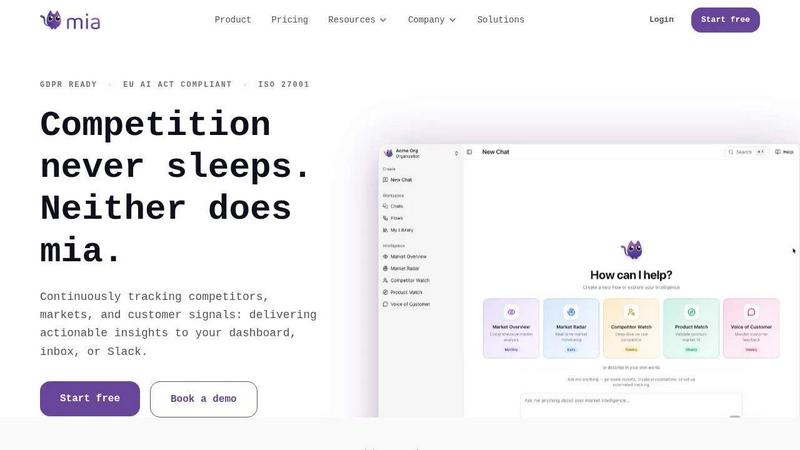
Mia
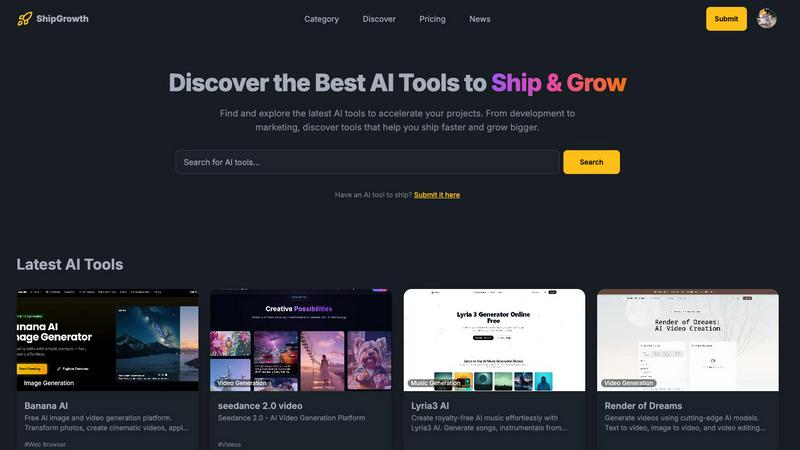
ShipGrowth
Overview
About Mia
Mia is an AI-powered market intelligence platform designed to help businesses harness the power of data for strategic growth. By continuously tracking competitors, market trends, and customer signals, Mia delivers actionable insights directly to users' dashboards, inboxes, or via Slack. This platform is perfect for startups, SMEs, and large enterprises looking to stay ahead in a competitive landscape. With an emphasis on data compliance—being GDPR and EU AI Act aligned—Mia focuses on providing transparent insights without sacrificing user privacy. Its ease of use allows companies to set up tracking in minutes, making it accessible for teams of all sizes. The core value proposition of Mia lies in its ability to transform raw market data into meaningful business intelligence, enabling informed decision-making that drives growth.
About ShipGrowth
ShipGrowth is your curated compass in the fast-moving world of artificial intelligence. Built from the frustration of sifting through endless tabs and sponsored lists, ShipGrowth is a discovery platform designed for makers, developers, and entrepreneurs who value their time. It cuts through the noise to deliver high-signal, production-ready AI tools that you can actually use to build and grow. The platform goes beyond a simple directory by offering side-by-side comparisons and practical, step-by-step integration guides. Whether you're looking for the perfect API for a new project, a marketing automation tool for your SaaS, or the latest in AI video generation, ShipGrowth helps you make an informed decision quickly. Its core mission is to shift your focus from tedious research to active building and shipping, accelerating your workflow from discovery to deployment.
Alternatives
Mia Alternatives
Mia is an AI-powered market intelligence platform designed to continuously track competitors, market trends, and customer signals. By providing actionable insights, it aims to support business growth and help organizations stay ahead in a competitive landscape. However, users often explore alternatives for various reasons, including pricing structures, specific features that may better suit their needs, or the compatibility of the platform with existing tools. When seeking alternatives to Mia, it's essential to consider factors such as the comprehensiveness of market analysis, ease of use, and the ability to customize reports or alerts. Additionally, evaluating customer support and integration capabilities can significantly impact the overall user experience. These considerations will help ensure that the chosen alternative aligns with your business goals and operational requirements.
ShipGrowth Alternatives
ShipGrowth - Discover, Compare & Submit Best AI Tools is a curated discovery platform and directory designed for makers, developers, and entrepreneurs. It helps users cut through the noise to find high-quality, production-ready AI tools across categories like content creation, development, and marketing, offering side-by-side comparisons and practical integration guides. Users often explore alternatives for various reasons. They might be seeking a different pricing model, a platform with a broader or more niche tool focus, or a directory that offers different community or submission benefits. The specific needs of a project or business can also drive the search for a platform with a unique set of features or a different user experience. When evaluating an alternative, consider what matters most for your workflow. Look for the depth and quality of tool listings, the clarity and usefulness of comparison data, and the availability of actionable guides or tutorials. A platform's curation standards, update frequency, and the value it provides to tool builders through features like backlinks are also key factors to weigh in your decision.