

Startup Science
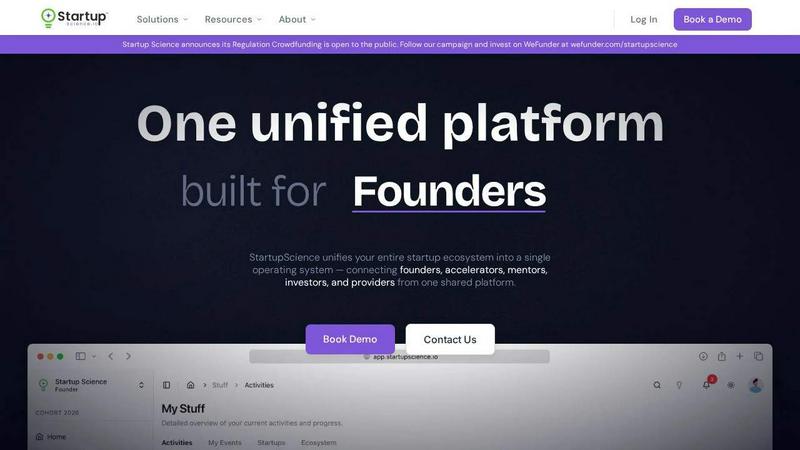
Startup Science unifies your entire startup ecosystem into one simple, connected operating system.
About Startup Science
Startup Science is the unified operating system designed to fix the fragmented startup ecosystem. It replaces the chaotic patchwork of disconnected tools—like separate applications, CRMs, learning management systems, and spreadsheets—with one cohesive platform built on a research-backed, seven-phase Startup Lifecycle. This framework was developed over 35 years and validated by 12 successful exits, providing a clear, evidence-based path from idea to exit. The platform connects every key stakeholder: founders get a structured cockpit to guide their journey; accelerators, universities, and other Entrepreneurial Support Organizations (ESOs) get scalable program management tools; mentors gain shared context to provide better advice; investors access higher-signal, better-prepared deal flow; and service providers can reach founders at their precise moment of need. By bringing everyone onto a single platform with a Unified Startup Profile, Startup Science creates a shared language and measurable progress, turning isolated efforts into a synchronized, efficient ecosystem where everyone can thrive.
Features of Startup Science
The Unified Startup Profile & Lifecycle
At the heart of Startup Science is a single, comprehensive profile for each startup that tracks progress through the research-backed seven-phase lifecycle. This profile provides a shared source of truth for founders, mentors, and investors, making progress visible and measurable. Instead of data being siloed across a dozen tools, everyone involved has a clear, unified view of the startup's stage, milestones, and needs, enabling targeted support and eliminating repetitive updates.
Integrated Program Management
This feature allows Entrepreneurial Support Organizations (ESOs) like accelerators to run entire cohorts from a single dashboard. It includes branded application pages, applicant tracking pipelines, cohort timelines, graduation workflows, and alumni engagement tools. By consolidating these functions, programs can cut administrative time in half, scale their operations without linearly increasing staff, and maintain consistent quality across multiple cohorts.
Mentor Matching & Engagement Engine
Startup Science provides a structured system for mentorship, connecting founders with the right advisors at the right time. Mentors can see a founder's complete profile and lifecycle stage before meetings, allowing them to show up prepared and offer relevant, impactful advice. The platform also includes tools to schedule sessions, track engagement, and measure the tangible impact of mentorship over time.
Capital Access & Investor Hub
This feature streamlines the connection between startups and funding. Founders can prepare for investment using the platform's structured milestones, while investors get access to a curated pipeline of companies with standardized, comparable data through the Unified Startup Profile. This reduces due diligence time and creates higher-signal deal flow, connecting capital with companies that are truly investor-ready.
Use Cases of Startup Science
For University Entrepreneurship Centers
A university running an incubator can use Startup Science to manage student applications, deliver a standardized curriculum, match students with alumni mentors, and track venture progress from class project to spin-out company. This replaces a jumble of learning management, form, and scheduling tools, giving staff a holistic view of student founder development and program outcomes for reporting.
For Accelerator Program Directors
An accelerator director can onboard a new cohort, manage the entire application and selection process, deliver the program's curriculum, facilitate mentor matches, and track key startup metrics—all within one platform. This eliminates the need to juggle 10-20 disconnected tools, dramatically reduces administrative overhead, and provides clear data to demonstrate impact to funders and stakeholders.
For Solo Founders Seeking Structure
A first-time founder with an idea can use Startup Science as their personal cockpit. The platform provides a clear, step-by-step roadmap based on the Startup Lifecycle, recommends actionable tasks, helps identify needed resources or mentors, and prepares all foundational elements required to eventually seek investment or join an accelerator program with confidence.
For Angel Investor Syndicates
An angel group can use the platform to source, screen, and manage deal flow. Instead of receiving unstructured pitch decks and financials, investors can review startups that have been building on Startup Science, giving them access to standardized profiles, progress history, and key metrics. This allows for more efficient screening and comparison, leading to better investment decisions.
Frequently Asked Questions
What is the Startup Lifecycle?
The Startup Lifecycle is the core framework of Startup Science. It's a seven-phase, research-backed model developed over 35 years of experience and 12 successful company exits. It provides a standardized map of the journey from idea to exit, giving founders a clear path forward and giving every other stakeholder in the ecosystem (mentors, investors, programs) a shared context to understand a startup's progress and needs.
How is Startup Science different from using separate tools like a CRM and an LMS?
While a CRM manages contacts and an LMS delivers courses, they operate in isolation. Startup Science is a purpose-built operating system that unifies these functions—program management, learning, mentorship, capital access, and analytics—around the startup itself. All data flows into the Unified Startup Profile, so progress is visible and actions are connected, eliminating data silos and manual work.
Can our existing program data be migrated to Startup Science?
Yes, Startup Science is designed for implementation in days, not months. The platform includes onboarding and support to help migrate essential data and get your ecosystem up and running quickly, allowing you to transition from your old patchwork of tools to a unified system with minimal disruption.
Who typically pays for access to the platform?
Access models are flexible. Often, Entrepreneurial Support Organizations (ESOs) like accelerators, universities, or economic development groups license the platform to run their programs. They then invite their founders, mentors, and partners to use it at no cost. This model ensures the entire supported ecosystem is unified on the same platform from day one.
Similar to Startup Science

TestNeo
TestNeo.ai is an AI-native engineering and release assurance platform that helps teams automate web and API testing using natural language.

sakuttoAI
A free suite of online tools for everyday tasks like PDF compression, image conversion, text diff and CSV to Excel.

SightRadar
Face recognition API, a drop-in replacement for AWS Rekognition. Index, search, compare and detect faces, billed per photo with no subscription.


JustTools
JustTools offers a growing collection of free online tools that run directly in your browser, with no sign-up and no uploads.


Dravyaa
Dravyaa is an AI-powered ERP platform that helps manufacturers, traders, and distributors manage sales, purchases, inventory, production, accounting,

CyberScore Labs
Enter your website address. In 60 seconds, get a free private report showing what hackers can see from the outside, and exactly how to fix it.