
CloudBurn vs RocketShare
Side-by-side comparison to help you choose the right AI tool.

CloudBurn
CloudBurn shows your AWS cost changes right in GitHub pull requests before they deploy.
Last updated: February 28, 2026

RocketShare
RocketShare lets you share files privately with encryption that even we can't access.
Last updated: March 3, 2026
Visual Comparison
CloudBurn
RocketShare
Feature Comparison
CloudBurn
Automated Pull Request Cost Analysis
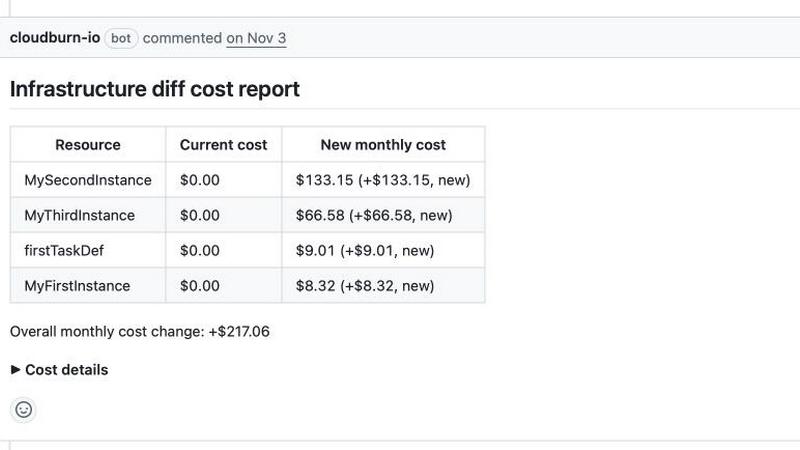
CloudBurn seamlessly integrates with your GitHub workflow to provide instant cost visibility. Whenever a developer opens a pull request with changes to Terraform or AWS CDK code, CloudBurn automatically springs into action. It analyzes the infrastructure diff, calculates the monthly cost impact using real-time AWS pricing, and posts a comprehensive report directly in the pull request thread. This automation makes cost review a natural, non-disruptive part of the code review process, ensuring no change slips through without financial scrutiny.
Real-Time AWS Pricing Data
Your cost estimates are always accurate and up-to-date. CloudBurn doesn't rely on stale, manual price lists or spreadsheets. It pulls pricing information directly from AWS, ensuring that every cost calculation in your pull request reflects the latest on-demand rates for services like EC2, Fargate, RDS, and more. This means you can trust the numbers you see, whether you're provisioning a new t3.micro instance or scaling up to a memory-optimized RDS cluster.
Detailed and Actionable Cost Reports
The tool provides clear, line-item breakdowns so you know exactly what's driving costs. A CloudBurn report doesn't just show a total; it lists each affected resource, its current cost, its new projected monthly cost, and the delta. It even breaks down the hourly rate and usage type, as shown in examples with EC2 instances and Fargate tasks. This granularity helps teams pinpoint expensive resources and have productive conversations about optimizing architecture or choosing more cost-effective alternatives before code is merged.
Secure GitHub-Centric Integration
Setup is simple and security is handled by the platform you already trust. CloudBurn is installed directly from the GitHub Marketplace and uses GitHub's robust permission system. There's no need to share sensitive AWS credentials or set up complex billing integrations. The tool operates securely within your GitHub environment, analyzing the plan or diff output from your existing CI/CD actions, which keeps your cloud account access secure and streamlined.
RocketShare
Zero-Knowledge Encryption
This is the cornerstone of RocketShare's security. Your files are encrypted on your own computer or device using a unique key before upload. This encryption key never leaves your control and is never sent to RocketShare's servers. Because the company has "zero knowledge" of your key, it is physically impossible for them to decrypt or view your files. This ensures true privacy, protecting your data from external breaches and internal access alike.
Client-Side Encryption
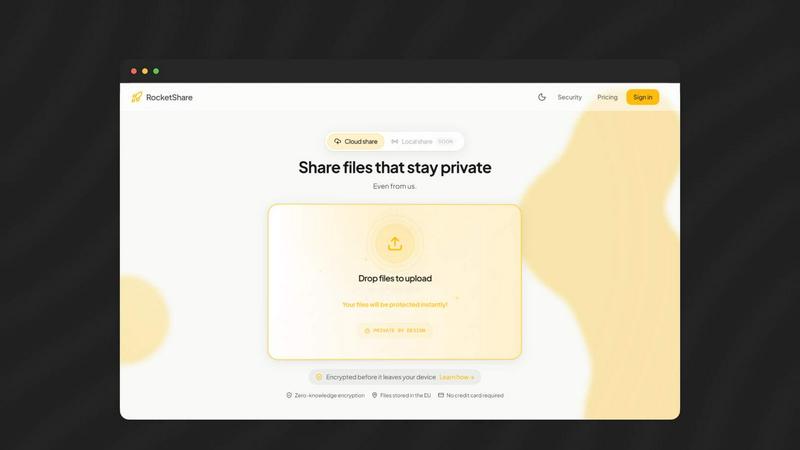
Building on the zero-knowledge model, encryption happens entirely on your device—this is known as client-side encryption. When you drag and drop a file into RocketShare, the app on your computer immediately scrambles the data into a secure, encrypted format. Only this scrambled, unreadable "blob" is ever transmitted and stored on the remote servers. This means your sensitive information is protected from the very moment you decide to share it.
Secure Share Links with URL Fragments
When you create a shareable link, the decryption key is cleverly embedded within the URL fragment (the part after the #). This fragment is not sent to the server during transmission; it stays locally in the browser of the person you're sharing with. The server only handles the encrypted file data and basic metadata (like file name and expiry), while the crucial key travels directly and securely to the recipient, enabling them to decrypt the file.
Flexible Sharing Modes (Cloud & Local)
RocketShare offers two powerful ways to share. The Cloud Share mode uploads your encrypted file to secure EU-based servers for easy, asynchronous sharing with anyone, anywhere. The Local Share (coming soon) mode creates a direct, peer-to-peer connection between devices for transferring files without them ever touching an external server, ideal for the most sensitive transfers on a local network.
Use Cases
CloudBurn
Preventing Costly Configuration Errors
Catch simple mistakes that lead to massive bills. A common error is accidentally changing an instance type from a t3.small to a much more expensive c5n.18xlarge in a Terraform module. Without CloudBurn, this might go unnoticed until the bill arrives. With it, the pull request immediately flags a monthly cost increase of thousands of dollars, prompting the team to correct the typo and save significant money.
Enabling Proactive Architecture Reviews
Facilitate better design decisions during code review. When a team proposes a new microservice using AWS Fargate, reviewers can discuss the cost implications of CPU and memory settings in real-time. CloudBurn's report provides the data needed to balance performance requirements with budget constraints, encouraging teams to choose the most efficient resource sizing from the start, rather than over-provisioning "to be safe."
Streamlining FinOps and Budget Governance
Embed financial accountability directly into engineering teams. CloudBurn acts as an automated gatekeeper, ensuring cost considerations are part of every infrastructure change. This empowers developers to own the cost impact of their code and helps platform or FinOps teams enforce policies without being a bottleneck. It creates a scalable, collaborative approach to cloud financial management.
Optimizing Existing Infrastructure
Use cost analysis for refactoring and cleanup initiatives. When planning to decommission old resources or migrate to newer, cheaper instance types, teams can open a pull request and use CloudBurn's report to quantify the expected savings. This provides clear, documented proof of ROI for cleanup efforts and helps prioritize which projects will have the biggest positive impact on the cloud bill.
RocketShare
Legal Document Exchange
Law firms and legal professionals regularly handle highly confidential case files, contracts, and evidence. RocketShare allows them to send these documents to clients, co-counsel, or experts with an auditable trail and the absolute assurance that the content is protected by zero-knowledge encryption, maintaining attorney-client privilege and compliance with data protection regulations.
Healthcare Data Sharing
Medical practices, therapists, and healthcare administrators can use RocketShare to safely transmit patient records, lab results, and insurance information. The platform's robust encryption ensures Protected Health Information (PHI) remains confidential, helping organizations meet strict HIPAA and GDPR requirements for data security and patient privacy during digital communication.
Creative Asset Delivery
Photographers, videographers, and marketing agencies can deliver high-resolution portfolios, campaign assets, and draft edits to clients without fear of unauthorized access or piracy. The sender controls the link expiry, and the encryption guarantees that only the intended recipient can view the final creative work, protecting intellectual property.
Secure Financial Collaboration
Accountants, financial advisors, and business owners need to share sensitive spreadsheets, tax returns, and audit reports. RocketShare provides a secure channel for this collaboration, ensuring that financial data is never exposed. Teams can confidently collaborate on sensitive projects, knowing the files are encrypted end-to-end.
Overview
About CloudBurn
CloudBurn is your team's financial safety net for cloud infrastructure. It's a specialized tool designed for engineering teams using Infrastructure-as-Code (IaC) tools like Terraform or AWS CDK. Its core mission is to prevent budget-busting surprises by bringing cost awareness directly into the developer workflow. The problem it solves is all too common: a developer merges a pull request, the new resources deploy, and weeks later, the finance team is staring at a shocking AWS bill, wondering what changed. By then, it's costly and risky to fix. CloudBurn stops this cycle by providing real-time, automated cost analysis for every infrastructure change before it's merged. When a pull request is opened, CloudBurn automatically calculates the exact dollar impact of the proposed changes and posts a clear, detailed report as a comment. This empowers developers and reviewers to have informed discussions about cost versus performance upfront, fostering a culture of proactive cost management (FinOps) and preventing expensive misconfigurations from ever reaching production.
About RocketShare
RocketShare is a secure file-sharing platform designed with one core principle: your privacy is non-negotiable. It allows individuals and businesses to send files of any size with the confidence that no one, not even RocketShare itself, can ever access the content. This is made possible through a zero-knowledge encryption model, where your files are encrypted on your own device before they ever touch the internet. The encryption key stays with you, often embedded in the share link itself, meaning the servers only ever handle unreadable, encrypted data. This approach provides enterprise-grade security in a beautifully simple, self-serve package. Whether you're a lawyer sending sensitive case files, a photographer delivering client galleries, or a team collaborating on confidential projects, RocketShare ensures your intellectual property and private data remain exactly that—private. With options for both cloud-based and local "peer-to-peer" sharing, and data stored securely in the EU, it’s the perfect tool for anyone who values simplicity without compromising on top-tier security.
Frequently Asked Questions
CloudBurn FAQ
How does CloudBurn calculate costs?
CloudBurn calculates costs by analyzing the output of your infrastructure tool's planning command—like terraform plan or cdk diff. It extracts the resource changes from this output and then queries the official AWS Price List API to fetch the current, on-demand hourly rates for those specific services and configurations in your region. It then extrapolates these hourly costs to a monthly estimate (based on 730 hours) to give you a clear picture of the recurring financial impact.
Is my AWS billing data or access key shared with CloudBurn?
No, CloudBurn does not require access to your AWS billing data or your AWS account access keys. The integration is secure and GitHub-centric. Cost calculation is performed using publicly available AWS pricing data. Your team's specific infrastructure configuration is sent securely from your GitHub Actions workflow to CloudBurn's service for analysis, but this does not include any live AWS credentials or direct access to your account.
What Infrastructure-as-Code tools does CloudBurn support?
Currently, CloudBurn provides dedicated support for two of the most popular IaC tools: HashiCorp Terraform and the AWS Cloud Development Kit (CDK). The setup involves adding a specific GitHub Action to your repository's workflow that is designed to capture the plan or diff output from either of these tools and send it for analysis.
Can I try CloudBurn before committing to a paid plan?
Absolutely! CloudBurn offers a free Community plan to get started. They also provide a 14-day trial of the Pro plan, which gives you full access to advanced features at no cost. You can begin using it without a credit card, and you can cancel the Pro trial at any time or simply continue using the free Community plan features forever if they meet your needs.
RocketShare FAQ
How does zero-knowledge encryption protect my files?
With zero-knowledge encryption, your files are encrypted on your device with a key only you possess. RocketShare's servers never receive this key, so they only store encrypted, unreadable data. Even if someone accessed the servers, they couldn't decrypt your files. Only someone with the unique link containing the key fragment can decrypt and view them, giving you ultimate control.
Where are my files stored?
All files uploaded via RocketShare's Cloud Share are stored on secure servers located within the European Union. This ensures that your data is protected under the EU's strong data protection laws (GDPR). The files are stored exclusively in their encrypted state, so the storage provider only ever handles scrambled data.
What is the difference between Cloud Share and Local Share?
Cloud Share uploads your encrypted file to RocketShare's secure servers, generating a link you can share with anyone. It's great for asynchronous sharing. Local Share (coming soon) establishes a direct connection between your device and the recipient's device to transfer the file without it going to any server, ideal for maximum privacy on the same network.
Do I need a credit card to start using RocketShare?
No, you do not need a credit card to start using RocketShare. You can sign up and begin using the service for free to experience its secure file-sharing capabilities. This allows you to test the privacy features and workflow before committing to a paid plan, if needed.
Alternatives
CloudBurn Alternatives
CloudBurn is a specialized tool in the development and DevOps category that automatically provides AWS cost estimates directly within pull requests. It helps teams using Terraform or AWS CDK catch expensive infrastructure changes before they are deployed, preventing unexpected cloud bills. Users often explore alternatives for various reasons. They might be looking for different pricing models, need support for additional cloud providers beyond AWS, or require deeper integration with their specific CI/CD pipeline or project management tools. Some teams may also seek more advanced forecasting or budgeting features. When evaluating other options, it's wise to consider a few key factors. Look for accuracy in cost estimation, the breadth of supported infrastructure-as-code frameworks, and the depth of integration into your existing development workflow. The goal is to find a solution that seamlessly fits your team's process and provides clear, actionable insights to foster better cost awareness.
RocketShare Alternatives
RocketShare is a secure file-sharing tool in the productivity and management category. It focuses on user privacy by encrypting your files on your own device before they are uploaded. The unique security key stays within the shareable link you create, meaning the service itself cannot access your data. People often explore other options for various reasons. You might need a different pricing plan, specific integrations with other software, or more storage space. Some users look for platforms with different collaboration features or those that are better suited for very large teams or personal use. When evaluating alternatives, consider your top priorities. Key factors include the level of security and privacy offered, the ease of use for both you and your recipients, and the overall cost for the features you need. It's also wise to check platform compatibility to ensure it works seamlessly with your devices.