
Keploy vs Requestly
Side-by-side comparison to help you choose the right AI tool.

Keploy automatically creates reliable unit and integration tests from your real API traffic.
Last updated: March 1, 2026

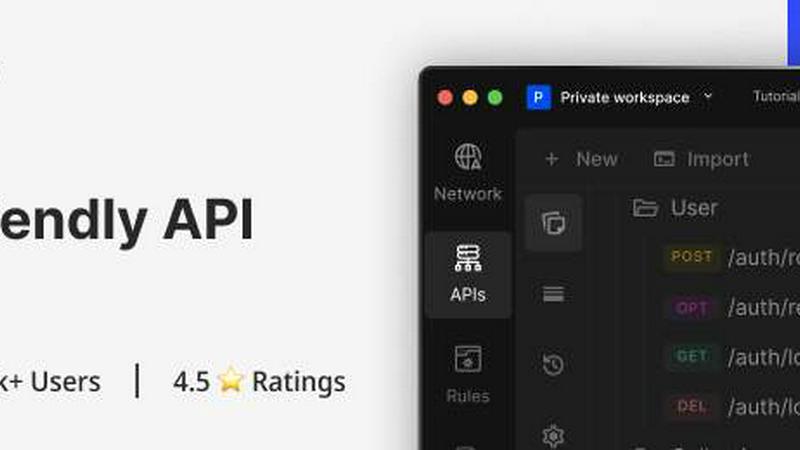
Requestly is a fast, git-based API client that enables easy collaboration without login, making API testing effortless and efficient.
Last updated: March 26, 2026
Visual Comparison
Keploy

Requestly
Feature Comparison
Keploy
AI-Powered Test & Mock Generation
Keploy uses advanced AI to automatically create stable, deterministic test cases and mocks by analyzing real API traffic. Instead of you writing countless lines of test code, it intelligently records live application behavior and transforms it into a comprehensive test suite. This includes generating precise stubs for databases, external services, and other dependencies, ensuring your tests run in a perfectly isolated sandbox every time.
Record and Replay API Traffic
This is Keploy's foundational feature. Using eBPF, it non-intrusively records all API calls and network interactions made by your application during normal operation or specific testing sessions. You can then replay these recordings as automated tests in your CI/CD pipeline. This ensures your tests are based on real-world usage patterns and data, making them far more relevant and reliable than manually scripted scenarios.
Coverage and Performance Reporting
Keploy doesn't just create tests; it gives you clear visibility into their effectiveness. It provides detailed coverage reports, showing exactly which parts of your codebase are exercised by your tests. Furthermore, it offers performance testing capabilities by analyzing the recorded traffic, helping you identify potential bottlenecks and ensure your application meets performance standards from the very beginning.
Seamless CI/CD and Developer Tool Integration
Built for developer workflow efficiency, Keploy integrates directly into your existing tools. It works natively with popular CI/CD platforms, automatically running the generated test suite on every pull request or build. For developers, there's also a dedicated VS Code extension, allowing you to generate, manage, and run tests directly from your IDE, making test creation a natural part of the coding process.
Requestly
Git-Native Collections
Requestly allows users to store their API collections in Git, enabling a seamless collaboration experience similar to software development. This feature facilitates version control, branching, and merging, making it easy for teams to manage changes and collaborate effectively.
Easy Import/Export
With Requestly, users can effortlessly import and export API collections and contracts from various sources, including Postman and OpenAPI. This feature ensures that transitioning to Requestly from other platforms is smooth and hassle-free.
Multi-Workspace View
Manage multiple local workspaces simultaneously with Requestly's multi-workspace view. This feature enables developers to easily switch between different projects, ensuring a more organized and efficient workflow without losing context.
Local Workspaces
Requestly emphasizes data privacy by keeping everything local. Users can work within secure local files, eliminating reliance on cloud storage. This feature provides peace of mind for developers concerned about data security and control.
Use Cases
Keploy
Accelerating Legacy Application Testing
Modernizing or adding tests to a large, untested legacy codebase is a daunting task. Keploy can be attached to the running application to record its real traffic. Within minutes, it generates a full suite of integration and API tests that reflect how the application is actually used, providing immediate test coverage and a safety net for future refactoring or feature development.
Ensuring Reliability in Microservices Architectures
Testing microservices is complex due to numerous interdependent services. Keploy simplifies this by recording interactions between services during development or staging deployments. It automatically creates mocks for each service, allowing teams to test their service in complete isolation with realistic data, catching integration bugs early without needing all dependencies running.
Rapid Prototyping and Development
When building a new feature or service, developers can use Keploy from day one. As they manually test their API endpoints via a browser or curl, Keploy records those sessions. It instantly generates the corresponding test cases, allowing the developer to build a robust regression suite in parallel with writing the actual feature code, ensuring quality keeps pace with velocity.
Maintaining Test Quality During Refactoring
When refactoring code for performance or clarity, a major concern is accidentally breaking existing functionality. With Keploy, the test suite is derived from real user behavior. This means you can refactor with confidence, knowing that the tests will accurately validate that the core user-facing workflows still perform exactly as they did before the changes.
Requestly
Seamless API Testing
Developers can utilize Requestly to test APIs quickly and efficiently, leveraging its built-in features like pre/post request scripts and the collection runner for batch testing. This enhances productivity and reduces the time spent on debugging.
Team Collaboration
Requestly's free team collaboration features allow teams to share workspaces, manage API collections, and collaborate in real-time. This is particularly beneficial for larger teams working on complex projects where coordination is key.
Effortless Migration
For teams transitioning from Postman, Requestly offers a one-click import feature, making it easy to bring over collections and environments. This simplifies the process and reduces downtime during the switch.
Secure Development Environment
Requestly provides a secure local development environment, which is particularly valuable for enterprises that require strict data protection. With features like role-based access control and data encryption, teams can ensure that their workflows remain compliant and secure.
Overview
About Keploy
Keploy is an AI-powered testing platform that fundamentally changes how developers ensure software quality. It's designed for modern engineering teams, especially those working with microservices and complex distributed systems, who are frustrated by the slow, manual, and often brittle process of writing and maintaining tests. Keploy's core magic lies in its ability to automatically generate accurate, reliable test cases and mocks by recording real user traffic and application behavior. Using eBPF technology, it observes API calls in real-time, capturing both the request and the response, along with all network interactions with dependencies like databases, internal services, or third-party APIs. This recorded data is then transformed into executable unit, integration, and API tests, complete with stubs for all external dependencies. The result is a dramatic acceleration in achieving comprehensive test coverage—up to 90% in minutes instead of weeks. It supports popular languages like Go, Java, Node.js, and Python, and integrates seamlessly into your existing development workflow and CI/CD pipelines. With Keploy, developers can shift testing left with confidence, catch regressions early, and significantly boost development velocity without compromising on code reliability.
About Requestly
Requestly is a modern, lightweight API client designed specifically for development teams that prioritize control and efficiency in their API workflows. Unlike traditional cloud-based solutions, Requestly operates with a local-first approach, ensuring that your data remains secure and stored directly on your machine. This is a significant advantage for teams looking to maintain version control over their API collections, as Requestly allows collections to be stored as files that can easily integrate with Git. With the power of AI integrated into its core, Requestly not only streamlines the process of writing requests and generating tests but also enhances debugging capabilities, making it faster and easier for developers to work with APIs. It supports both REST and GraphQL, offering features like schema introspection, pre/post request scripts, and environment variables. The platform also encourages collaboration with its free-tier features, which include shared workspaces and role-based access control. With no sign-up required, developers can start using Requestly immediately, a feature that has gained the trust of over 300,000 users from top companies like Microsoft, Amazon, Google, and Adobe.
Frequently Asked Questions
Keploy FAQ
How is Keploy different from other AI testing tools?
Unlike tools that are simply wrappers around large language models (LLMs) which can generate hypothetical tests, Keploy is behavior-driven. It uses eBPF to record actual API calls and network activity from your running application. This results in tests that are accurate, reliable, and based on real-world usage, not guesses. It generates both the test cases and the necessary mocks/stubs automatically.
What programming languages and frameworks does Keploy support?
Keploy currently offers robust support for several popular languages including Go, Java (Spring Boot), Node.js, and Python. It is designed to work with standard frameworks and HTTP servers within these ecosystems. The team is actively working on expanding support to more languages, and you can check their official documentation for the most up-to-date list.
Can I use Keploy in my CI/CD pipeline?
Absolutely! Keploy is built for modern DevOps practices. The tests and mocks it generates are standard, portable artifacts (like Go tests or JUnit-style tests). These can be easily integrated into any CI/CD system such as GitHub Actions, GitLab CI, Jenkins, or CircleCI. You can configure your pipeline to run the Keploy test suite automatically on every commit or pull request.
Is Keploy an open-source tool?
Yes, Keploy has a strong open-source foundation. Its core engine is available on GitHub, where it has garnered significant community support with over 15.6k stars. This allows developers to self-host, inspect the code, and contribute. Keploy Inc. also offers enterprise-grade cloud solutions with additional features, support, and managed services for teams needing a fully hosted solution.
Requestly FAQ
Is Requestly really free to use?
Yes, Requestly offers a generous free tier that includes many features, allowing developers to start testing APIs without any sign-up or payment required.
Can I import my Postman collections to Requestly?
Absolutely! Requestly provides a one-click import feature that allows you to bring your Postman collections and environments into the platform seamlessly.
What types of APIs does Requestly support?
Requestly supports both REST and GraphQL APIs, equipped with features like schema introspection and pre/post request scripting to facilitate efficient development.
How does Requestly ensure data security?
Requestly employs top-tier security measures, including SOC-II compliance, data encryption, and role-based access control, ensuring that your data remains secure and your workflows are protected.
Alternatives
Keploy Alternatives
Keploy is an AI-powered testing platform that automates the creation of unit and integration tests for developers. It falls into categories like AI assistants and development tools, helping teams achieve high test coverage quickly by recording real application behavior. Users often explore alternatives for various reasons. This could be due to specific budget constraints, a need for different integration capabilities, or a requirement for support in a programming language or framework not currently covered. Every team's tech stack and workflow is unique. When evaluating other options, consider what matters most for your workflow. Key factors include the tool's ability to integrate with your existing CI/CD pipeline, the languages and frameworks it supports, the realism of the test mocks it generates, and the overall learning curve for your team. The goal is to find a solution that reduces manual effort while reliably safeguarding your code quality.
Requestly Alternatives
Requestly is a lightweight API client tailored for modern development teams, providing them with full control over API workflows while keeping data local rather than in the cloud. It allows teams to manage API collections like code, leveraging features such as version control and collaborative workspaces. Users often seek alternatives due to factors like pricing, specific feature sets, platform compatibility, or the need for team collaboration tools. When searching for an alternative, it’s essential to consider ease of use, data security, integration capabilities, and the overall support for the developer community.