
FilexHost vs Perkoon
Side-by-side comparison to help you choose the right AI tool.

FilexHost
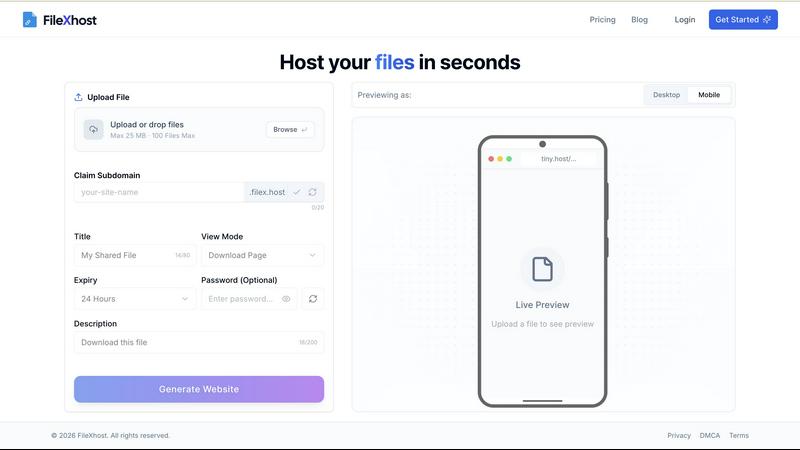
Easily host and share any file with instant URLs, secure access, and built-in viewers for a seamless experience.
Last updated: February 26, 2026

Limitless transfers for humans & AI. No signup.
Visual Comparison
FilexHost
Perkoon
Overview
About FilexHost
FilexHost is an innovative file hosting and sharing platform designed to simplify the way users share files online. Whether you need to share documents, media files, spreadsheets, or even entire websites, FilexHost has you covered. Its intuitive "Drop & Share" workflow allows you to drag and drop your files, generating a secure URL in seconds—no complicated setups or logins required for recipients. This service caters to professionals, developers, creatives, and anyone who needs hassle-free file delivery. The platform supports a wide range of file types, ensuring that your content is displayed optimally. With its focus on viewer experience, FilexHost presents your files beautifully without requiring additional downloads or plugins, making it the ideal solution for fast, secure, and efficient file sharing.
About Perkoon
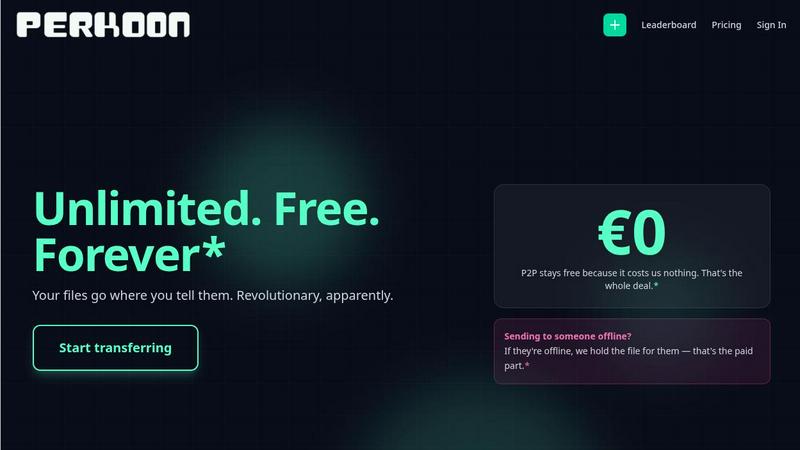
File transfer was a solved problem. Then everyone decided to make it worse — size caps, forced signups, expiring links, surprise paywalls. The usual.
Perkoon unsolved it.
Free P2P transfers beam files directly between browsers. No server in the middle. No size limit. No account. Both parties online, files move. Simple physics.
Cloud storage exists for when the other human is offline, encrypted and waiting for them whenever they show up. This one costs money. Servers aren't powered by good vibes.
Here's where it gets interesting: Perkoon is the first file transfer service built with native agent accessibility. Machine-readable state, stable DOM selectors, automation API. Your AI workflows can send and receive files without pretending to be a human clicking buttons. The future showed up early.
CLI included: npx perkoon send/receive. Works browser-to-CLI, CLI-to-CLI. Because terminals deserve nice things too.