
ScopeSnap vs Skene
Side-by-side comparison to help you choose the right AI tool.

ScopeSnap
AI streamlines project scoping & proposals.

Skene transforms your code into a growth engine by automating onboarding, activation, and retention seamlessly.
Last updated: February 28, 2026
Visual Comparison
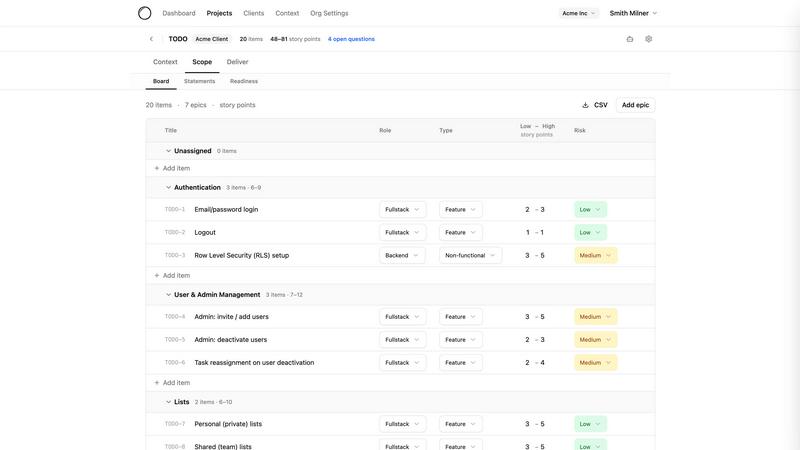
ScopeSnap
Skene
Overview
About ScopeSnap
ScopeSnap helps freelance developers and software agencies turn messy discovery notes into structured project scopes, estimates, and client-ready proposals.
Estimating custom software projects is often slow and risky. Important requirements get missed, scopes stay vague, and proposals take hours to assemble. ScopeSnap simplifies this process.
Using AI, ScopeSnap helps you break down project ideas into clear, estimatable tasks. You can iteratively refine scope until every feature is well understood and confidently estimated.
Once the scope is ready, ScopeSnap automatically generates a polished proposal or statement of work you can send to clients.
ScopeSnap is designed for freelancers, consultants, and software agencies who regularly scope and estimate custom development projects.
About Skene
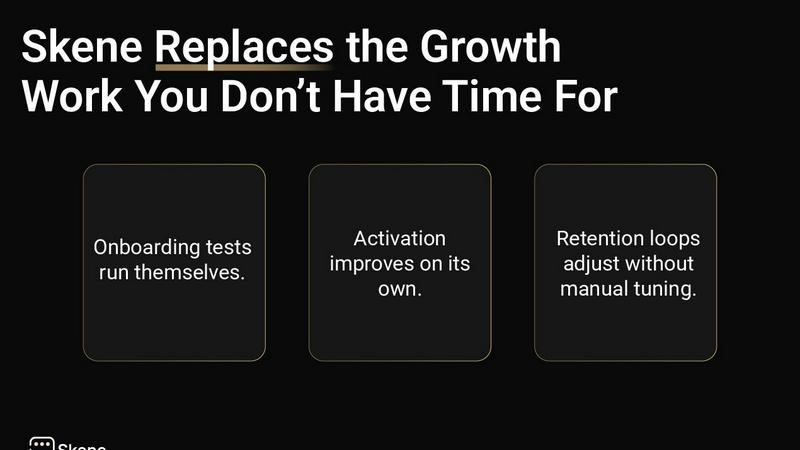
Skene is a revolutionary Product-Led Growth (PLG) iteration engine that is fully automated and tailored for indie developers and early-stage startups. It enables these creators to achieve outstanding growth without the burden of managing extensive growth teams. By optimizing key stages of the user journey—such as onboarding, activation, and retention—Skene utilizes insights derived directly from the codebase to enhance user experience. It continuously monitors user interactions to pinpoint friction points and activation drop-offs, allowing it to autonomously create and test improved user flows. This means that onboarding becomes progressively better, activation is seamless, and retention strategies remain effective with minimal manual involvement. With Skene, developers can ditch complicated dashboards and exhaustive growth meetings, focusing instead on building their products while the platform takes care of growth-related tasks.