
Alternatives to Game Server Backend
Explore the best alternatives and competitors to Game Server Backend.
Explore 20 alternatives to Game Server Backend. Compare features, pricing, and find the best fit for your needs.

IdeaAize Free AI Tools
IdeaAize Free AI Tools is a suite of 50+ free online utilities that run 100% in your browser — no registration, no file uploads, no watermarks.

TokenSave
Free AI token counter and cost calculator for ChatGPT, Claude and Gemini, plus a private Claude Code usage analyzer.

APIKO AI API
One OpenAI-compatible endpoint for text, image and video models from OpenAI, Anthropic, Google, DeepSeek and more.

BlazePhoenix
On-chain DEX aggregator: the swap route is computed inside the transaction that executes it. No API key, no signup.


AFFLIGO
AFFLIGO is a free online toolkit for everyday file tasks. Easily edit PDFs, compress images, convert file formats, and get things done.

SightRadar
Face recognition API, a drop-in replacement for AWS Rekognition. Index, search, compare and detect faces, billed per photo with no subscription.

JevModel
Bilingual console and guide for the jev decision model: classify, route, and score text or JSON.

LinkIntel
MCP server giving your AI assistant your X post results and X’s ranking weights, with sources.
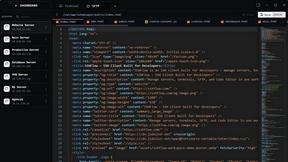
SSHFlow
SSH client for developers with integrated SFTP, code editing, terminal workspaces, server monitoring, and AI assistance.

SafePDF
Free online PDF tools to merge, split, compress, convert, sign, and edit PDFs privately in your browser. No signup required.

ShipNLaunch
Launch your Saas, AI tool on ShipNLaunch and get discovered through product pages, weekly rankings, categories, and maker profiles.

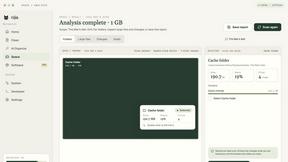
Nijia
A paid Mac app with local AI-assisted file organization, editable proposals and reviewed storage cleanup.



Luminus Tools
A fast, privacy-first suite of online calculators, financial desks, health trackers, and developer utilities running completely in your browser withou

AvantaGPT
Unrestricted AI for cybersecurity researchers, Linux developers, and technical power users.

RankCert
Launch board ranking products on verified domain control, plus 80+ free SEO and utility tools. Rankings cite evidence.

shardstitch
ShardStitch helps recover and hand off AI coding work, with a visual website editor and SEO Guardrails MCP in development.
About Game Server Backend Alternatives
Game Server Backend is a hosted platform designed for game studios and indie developers who need to add multiplayer functionality to their titles without building and maintaining the complex server infrastructure themselves. It falls under the Dev Tools category, specifically targeting the backend-as-a-service niche for games. The platform bundles essential features like matchmaking, leaderboards, player profiles, and live-ops configuration behind a single API, with ready-to-use SDKs for Unity, Unreal Engine, and Godot. Developers often look for alternatives to Game Server Backend for several practical reasons. Pricing models can be a major factor, especially for smaller teams or projects with unpredictable player counts, as some platforms charge based on concurrent users or data storage. Others might need a feature that isn't included in the standard package, such as a specific authentication method, a unique matchmaking algorithm, or deeper analytics. When evaluating alternatives, it is wise to consider the total cost of ownership, the ease of integration with your chosen game engine, the scalability of the solution, and the quality of documentation and community support. A good alternative should let you focus on your game, not on server maintenance.
FAQs about Game Server Backend Alternatives
What is Game Server Backend?
Game Server Backend (GSB) is a hosted multiplayer backend platform designed for game studios and indie developers. It bundles the essential operational infrastructure needed for a multiplayer title behind a single, unified API. This allows teams to ship their games without having to rebuild and manage backend services from scratch, covering areas like matchmaking, leaderboards, player profiles, and live-ops configuration.
Who is Game Server Backend for?
Game Server Backend is built for both game studios and indie developers who are creating multiplayer games. It is particularly useful for teams that want to focus on game design and player experience rather than spending time building and maintaining server-side infrastructure. The platform provides drop-in SDKs for Unity, Unreal Engine, and Godot, making it accessible to developers already working in those engines.
What are the main features of Game Server Backend?
GSB offers a comprehensive set of features including matchmaking, global and regional leaderboards, player profiles, persistent JSON state storage per user, a server registry for community-server discovery, in-game economy primitives, and a live-ops configuration layer for pushing gameplay tuning without a client patch. It also supports three authentication methods out of the box: anonymous accounts, passwordless email sign-in, and Steam OpenID.
Is Game Server Backend secure?
Yes, Game Server Backend is designed with security in mind, particularly through its support for multiple authentication pathways including Steam OpenID and passwordless email sign-in, which reduces common vulnerabilities associated with password management. The platform handles player data through secure API calls, and the persistent JSON state per user is managed within a controlled server environment. For specific security certifications and data handling policies, you should review the official documentation provided by the service.